Written by Trackandmemes on July 23, 2026
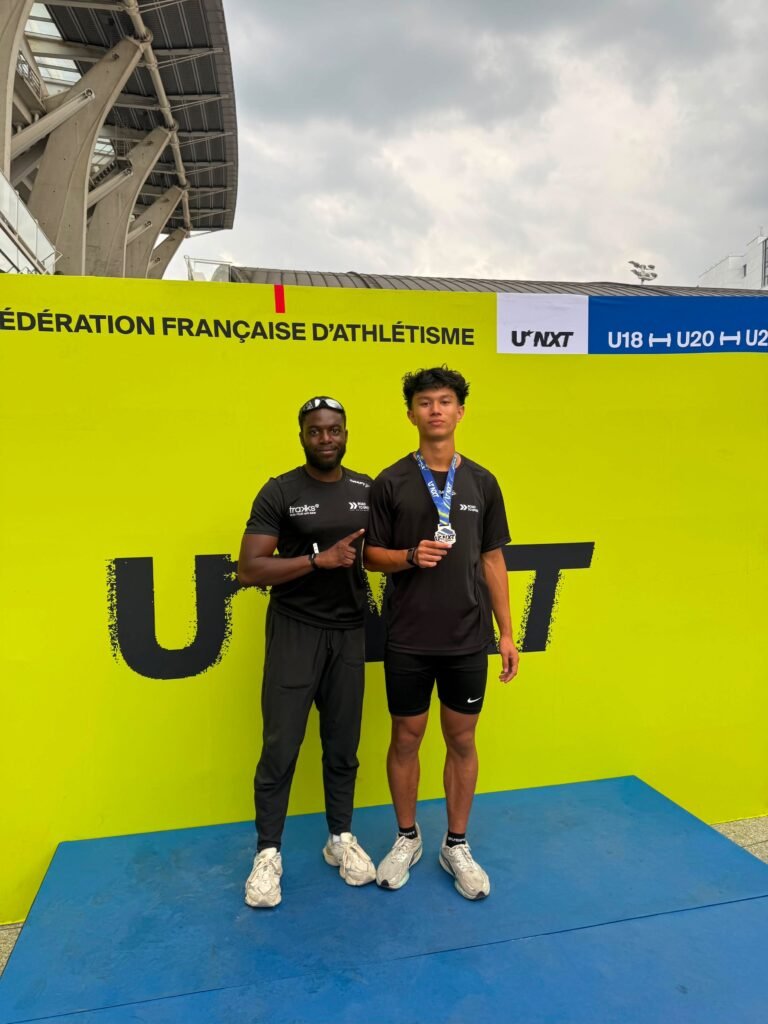
Henry Labbaci, specialist in the 100 meters and long jump, Henry Labbaci is only just beginning to make a name for himself! Having only recently returned from injury, he claimed the silver medal this summer at the French Championships, in the 100 metres in 10.87 seconds, and in the long jump, soaring to 6.99 metres.
Currently based in the United States, while regularly spending time in France and Belgium, Henry has chosen to work with the Belgian coach who first spotted his talent, Franck Keïta.
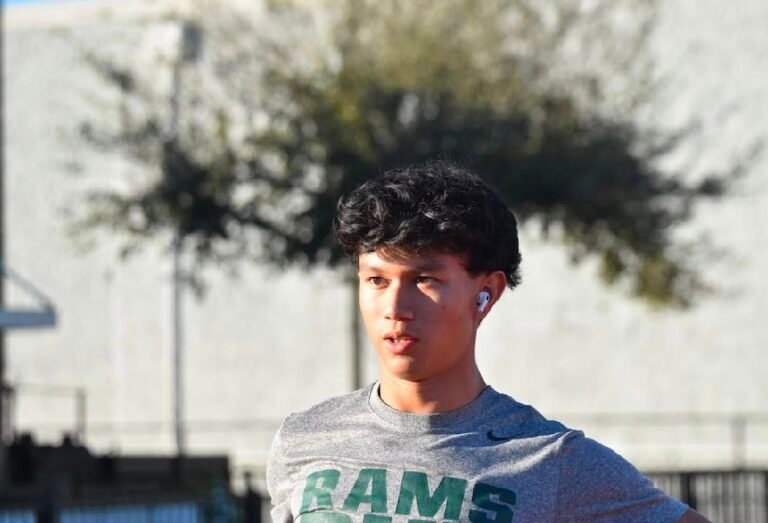
I grew up between Hong Kong, France, and Belgium.
I was born in France, and a few months after my birth, we moved to Hong Kong because of my father’s job. I lived there for about three years. We then returned to France, where we stayed for several years, before moving once again, this time to Belgium.
It was therefore in Belgium that I discovered athletics and met Franck Keïta, who immediately instilled in me a strong work ethic and a real sense of discipline. Thanks to him, I quickly realised that I had the potential to compete at the highest level…
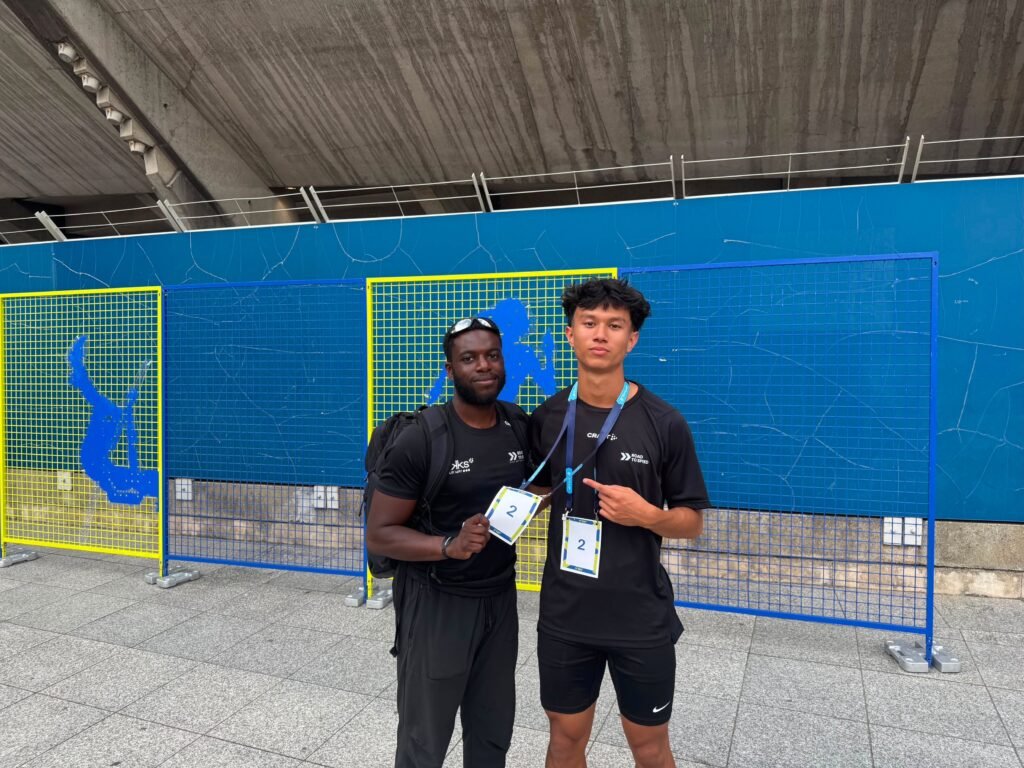
Today, I can honestly say that when we first met, Franck chose me. I still remember my very first day at CSF, when he quickly showed me that he believed in my potential. As I got to know his approach, I immediately connected with it. He’s an attentive and dedicated coach who is always looking for what’s best for his athletes. He doesn’t just design training sessions—he genuinely supports the bigger picture, whether it’s helping me find the right university or guiding the next steps of my career.
Has your partnership paid off ?
Well… I only started athletics in 2022. I progressed very quickly and soon reached a high level. I won two Belgian U16 titles in the 60 metres, one Belgian U16 title in the 60-metre hurdles, and set the LBFA U16 records in both the 100 metres and the long jump. I even equalled the Belgian 60-metre record—although it could not be officially recognised because I’m French.
What happened next ?
I followed my father to the United States.I chose to continue working with Franck remotely. The transition wasn’t easy. I struggled with osteitis pubis for a year and a half, and I often had to train on my own. That injury was only resolved a month ago. But despite that difficult period, I never gave up. I came back just in time to qualify for the 2026 French Championships, where I won two U18 silver medals—in the 100 metres and the long jump.
Today, my goal is clear ! to keep improving and reach the highest level.
How has your experience in the United States been ?
I moved to the United States because of my father’s job. I attend an international school with a French section, which allows me to follow the French curriculum and prepare for the baccalauréat.
From a sporting perspective, the biggest change was having to train alone most of the time, without a coach on site whose approach matched my goals. So I continued working with Franck remotely. It isn’t always easy, especially when it comes to dealing with unexpected situations or adapting to the equipment available. But this experience has helped me grow enormously. It has taught me to take responsibility and remain disciplined, even when I’m far away from the group.


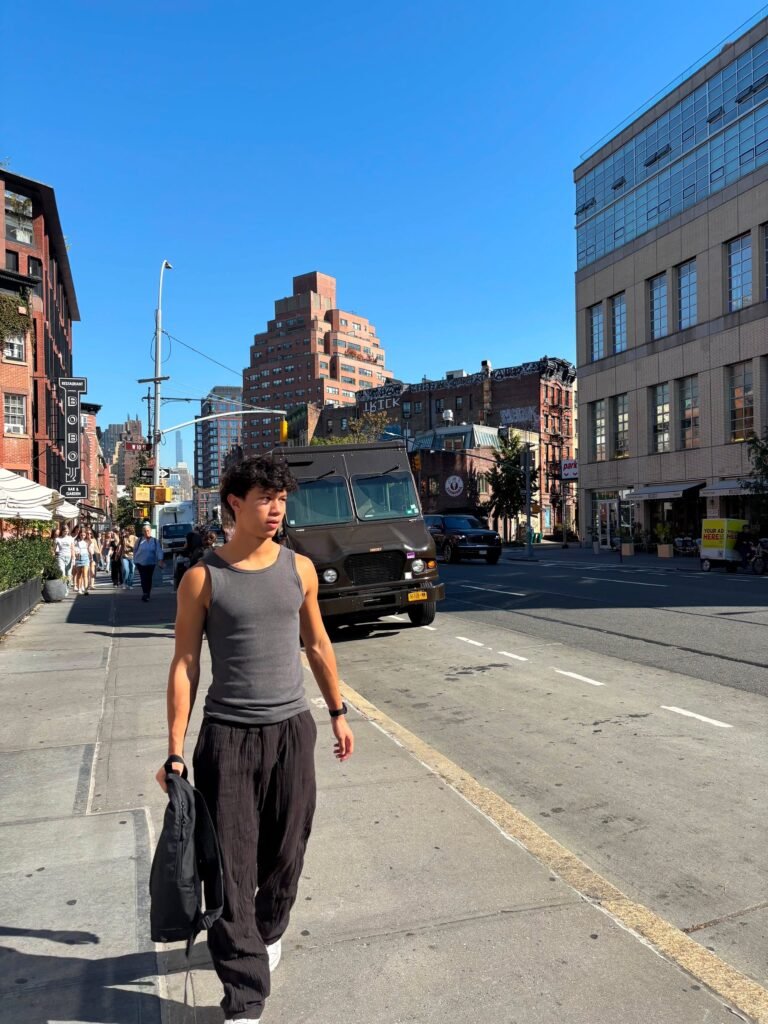
In the short term, my goal is to keep improving, compete consistently without injury, and return to my best level. In the longer term, I hope to earn a placeon the French national team, to compete in major international competitions and see how far I can go in the sport.
How do you manage travelling back and forth between France, Belgium, and the United States ?
I don’t have much flexibility when it comes to travelling because of the school calendar and the baccalauréat. As soon as the school year ends, I take the first flight back to Europe. I make the most of those two months to spend time with my family, my grandparents and my sisters, train with my coach and the group, and compete in a series of events in France and Belgium.
In reality, having to organise everything within such a short period of time is the most challenging part. I often have to make choices, as it is impossible to do everything. That is the price I have to pay to balance my studies in the United States with my sporting ambitions in Europe.
Three things you have learned since becoming an athlete in the United States
The first is learninghow to adapt to the heat.In Texas, we often train in temperatures of 30–35°C, and sometimes even higher. I’ve learned how to cope with those conditions.
The second is learning tolisten to my body.After nearly two years of dealing with an injury, I realised that sometimes it’s better to stop a training session than to push through the pain. Today, I understand my body much better.
Finally, the third is responsibility.Being so far away has forced me to become much more independent in my training and to keep moving forward, even when there’s no one there to push me.
What are three things you dislike about the United States ?
The first is the reliance on cars.In the United States, especially in Texas, there are very few pavements, and everything is designed around driving, unlike in Europe.
The second isfood and some everyday products. There are a lot of ultra-processed foods, and I find it harder to trust what I’m buying. I miss simple things like a good baguette, cheese, yoghurt, or saucisson.
The third is being so far away from my family and loved ones. When you’re thousands of miles from home, you realise just how precious it is to spend time with the people you love.
What are three things you love about the United States ?
The first is that everything is bigger : the infrastructure, the roads, the shops… Everything feels huge.
The second is the climate. In Texas, it’s warm and sunny almost all year round, which is completely different from Belgium.
The third is theoverall atmosphere. It really feels as though you’re living in an American movie, whether you’re on campus, at sporting events, or simply going about your everyday life.
One thing you don't like about the mindset American sporting mindset
From what I’ve observed, I sometimes feel that the mindset is a little less focused on listening to the athlete.There’s often an expectation that everyone should follow the same training programme, even though every athlete is different.Taking each individual’s feedback into account would help reduce the risk of injury and maximise long-term progress.
One thing you don't like about the mindset American sporting mindset
What I admire most is their work ethic. They’re not afraid to work hard, push their limits, and constantly strive to improve.
Why didn’t you choose to work with an American coach ?
In the United States, sport is organised differently at my school. It’s a private institution, so it doesn’t operate like a public high school. The school year is divided into three sports seasons—each lasting about four months—which allows students to try several different sports throughout the academic year.
The problem is that track and field is only offered during one of those three seasons. For someone aiming to compete at the highest level, that isn’t enough. Ideally, you need consistent coaching and carefully planned training cycles throughout the entire year.
High-performance coaches do exist in the United States, but they’re often already affiliated with major universities or very difficult to access. And when they do offer one-on-one coaching, it can also come at a very high cost.
How do you manage to continue working remotely with Franck Keïta, coach at Roadtospeed ?
Franck has created a dedicated workspace on Notion where I can access all my training sessions, performance tests, personal bests, and a shared calendar so we can track the season together.
We have a weekly call to review my training, discuss how I’m feeling, and plan for upcoming competitions. After almost every session, I also send him feedback along with videos so he can analyse my technique and make any necessary corrections.
Tell us a funny story from your time in the United States 🇺🇸
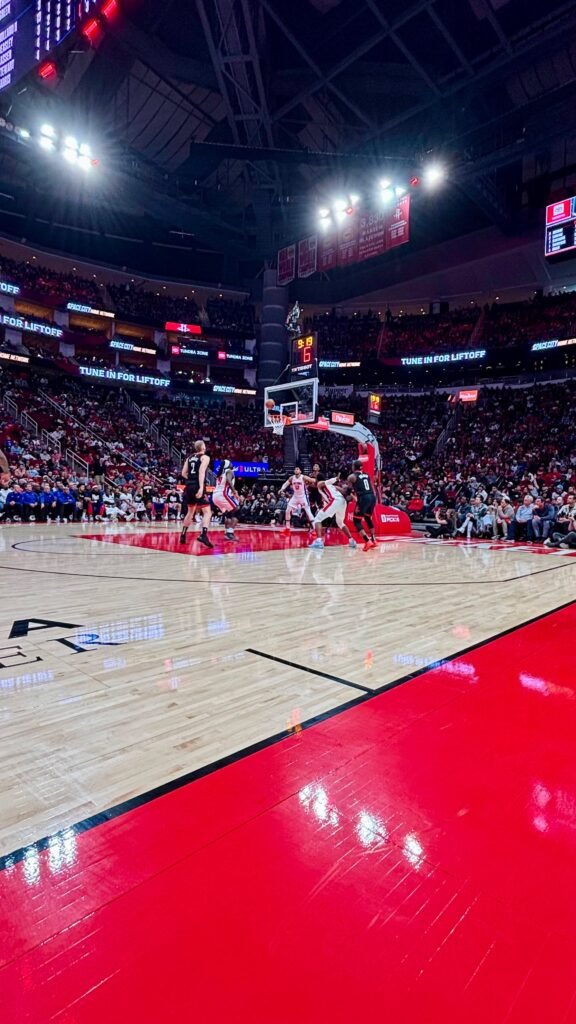
One experience that really stayed with me happened just a few weeks after I arrived in the United States. A friend from school invited me to watch a basketball game. We had bought tickets right at the top of the arena for around ten dollars.
Then his father called us—some courtside seats had just become available. We suddenly found ourselves right nextto the players, with access to the lounges and the buffet. It was an absolutely incredible experience. I had only just arrived in the United States, so it was the perfect introduction to American sports culture.
Do you think your time in the United States has had a positive impact on your sporting career ?
In the short term, I don’t think it was an advantage from a sporting perspective. I got injured shortly after arriving in the United States, and being far away from my usual environment, from Franck, and from the doctors and physiotherapists I already knew made that period more difficult. It clearly slowed down my progress.
On the other hand, in the long term, I think this experience will bring me a lot. I have become more independent and mature, improved my English, and met some great people. If I ever continue my career at an American university, this experience will definitely be a real advantage.
So, even though the start was challenging from a sporting perspective, I think that, looking back, moving to the United States could turn out to be a real opportunity for the rest of my career.
Were you able to make a group of friends at school ?
Yes, definitely! I managed to find a great group of friends. I get along really well with them, and I’ve found people who encourage me to grow, both in sport and in my studies.

 EN
EN  FR
FR